


GM Expands P2C7A Diagnostic Bulletin to Cover 2026 3.0 Duramax Trucks and SUVs

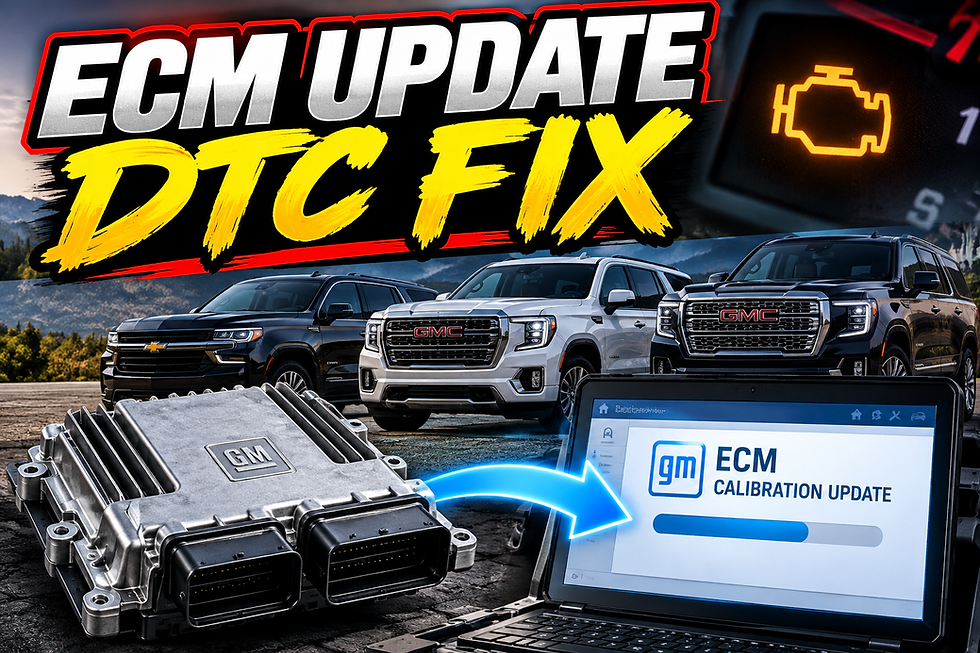
General Motors has revised bulletin # 25-NA-299, expanding the application of a known diagnostic tip for P2C7A on the 3.0L Duramax platform.
If you own an LM2 or LZ0-equipped truck or SUV and have seen a MIL with P2C7A stored, this update matters.
What Changed?
The February 25, 2026 revision significantly expands vehicle coverage. The bulletin now includes:
2020–2024 Escalade / Escalade ESV
2020–2026 Silverado 1500
2020–2026 Sierra 1500
2021–2026 Suburban, Tahoe, Yukon, Yukon XL
This now spans both LM2 and LZ0 engines across nearly the entire production run of the 3.0L Duramax light-duty lineup.
It also adds:
Additional global regions
Expanded service procedure steps
Specific parts information
This is not a new failure trend. It is an expansion confirming the diagnostic pathway applies across more vehicles than originally listed.
The Condition
Customers report:
Malfunction Indicator Lamp illuminated
DTC P2C7A stored
In many cases, drivability feels completely normal.
What Is P2C7A on the 3.0 Duramax?
On LM2 and LZ0 applications, P2C7A typically relates to aftertreatment efficiency modeling. The ECM is comparing:
Airflow
Exhaust pressure
NOx sensor readings
DEF dosing performance
When those values do not align within expected thresholds, the system flags a fault.
The important takeaway: this code frequently stems from system integrity issues, not immediate component failure.
Expanded Diagnostic Direction From GM
The updated bulletin outlines structured checks before replacing sensors or catalysts.
Induction Leak Ratio Check
During a wide-open throttle shift event, the induction leak indication ratio should be close to 1:1.
If it is not:
Charge air hoses
Intercooler connections
Induction piping
should be inspected carefully.
Unmetered air upstream changes exhaust modeling downstream.
DEF Injector Inspection
Technicians are instructed to verify:
Proper reductant injector volume
No exhaust fluid leakage
The bulletin calls out replacing the front exhaust gasket and injector clamp when necessary.
Any leak or incorrect dosing affects NOx conversion efficiency.
Service Regeneration and NOx Comparison
During a service regen:
All three NOx sensors should read within 50 ppm of each other while regeneration is active.
If one sensor is skewed, the ECM’s efficiency model can miscalculate.
Exhaust Leak Inspection – Critical Step
This is where many P2C7A cases are found.
The bulletin references prior exhaust leak guidance and notes the need to remove the right front wheel and liner to inspect the front exhaust connections.
However, leaks can occur anywhere in the system. Areas to pay close attention to include:
Front of Exhaust System
Turbo outlet connection
Front exhaust flange
Norma clamps
Updated seal and clamp interfaces
Backpressure Valve (LM2 Specific Concern)
On the LM2 variation, the exhaust backpressure valve assembly is a common area to inspect carefully.
Potential leak points include:
Valve housing seams
Gasket surfaces
Weld joints
Shaft seal areas
A small leak here can distort pressure readings enough to affect modeled exhaust efficiency, especially during regen or load transitions.
The LZ0 does not use the same configuration, so this is primarily an LM2 inspection focus.
Best Way to Find Exhaust Leaks
Visual inspection alone is often not enough.
One of the most effective methods is:
Perform a controlled exhaust pressure test
Apply a soap-and-water solution to:
Flanges
Clamps
Gasket joints
Weld seams
Sensor bungs
Look for bubbling under pressure
Even minor bubbling indicates leakage that can skew sensor readings.
Small leaks that are not audible can absolutely trigger P2C7A due to how sensitive modern emissions modeling has become.
Technicians are even allowed to temporarily seal a confirmed leak during diagnosis to continue testing, which tells you how commonly leak correction changes the outcome.
Final Diagnostic Steps
After leak repair:
Reset all NOx sensors
Perform fuel injector small quantity adjustment reset
Clear code
Perform 20–50 mile highway drive (A/C off) to allow self-test
If P2C7A returns after confirmed system integrity, deeper SI diagnostics are required.
What I Would Do
If I saw P2C7A on an LM2 or LZ0:
Smoke or pressure test the induction system
Pressure test the exhaust system
Inspect LM2 backpressure valve carefully
Inspect all exhaust clamps and seals
Verify reductant injector integrity
Run service regen and compare NOx deltas
I would not replace NOx sensors or aftertreatment components until I confirmed there were zero leaks.
Why This Bulletin Expansion Matters
The update through 2026 confirms:
The diagnostic sensitivity remains in place on newer LZ0 trucks
Exhaust sealing integrity is critical
Minor leaks can trigger emissions faults
This is not limited to early production trucks
Modern diesel emissions systems are model-based and highly precise. Even small deviations in airflow or exhaust pressure can result in P2C7A.
For 3.0 Duramax owners, this reinforces something important:
Before replacing expensive components, verify the system is sealed and reading correctly.
Comments